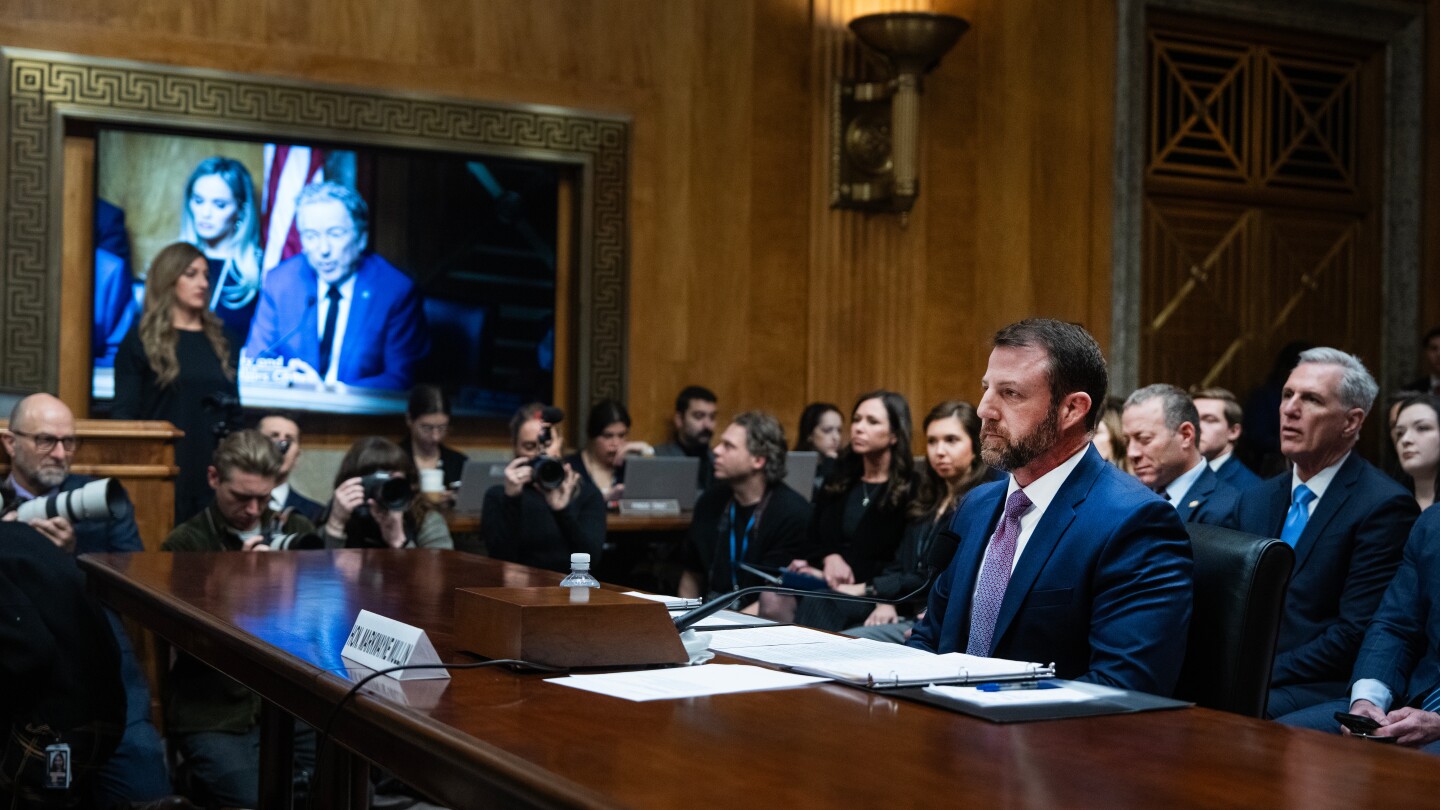
Markwayne Mullin's Confirmation Hearing: A Classified Trip Ignites Rand Paul Debate
The Senate confirmation hearing for Markwayne Mullin, nominated to become the next Department of Homeland Security (DHS) Secretary, quickly escalated into a high-stakes debate centered on a mysterious classified overseas trip. The Oklahoma Republican, put forward to replace embattled Secretary Kristi Noem, faced intense scrutiny, particularly from Kentucky Senator Rand Paul. As the drama unfolded, the demand for transparency clashed with national security protocols, leaving many wondering about the implications for Mullin's nomination. For those tracking the process, this intense exchange became a defining moment of the mullin hearing live proceedings, highlighting the complex balance between congressional oversight and classified government operations.
Mullin’s nomination comes at a critical time for the DHS, a department grappling with significant challenges ranging from border security to cybersecurity threats. His appearance before the Senate Homeland Security & Governmental Affairs Committee on Wednesday was intended to be a thorough examination of his qualifications and vision. However, the hearing took an unexpected turn as questions surrounding a specific 2015 trip became the primary focus, pushing other policy discussions to the background.
The Enigma of the 2015 Classified Overseas Mission
The core of the controversy revolved around an overseas trip Mullin undertook in 2015. Senator Rand Paul initiated the challenge, pressing Mullin for details about what Paul described as a "super secret mission." Mullin, in turn, repeatedly insisted that the details of the trip were classified and could only be discussed in a secure location, known as a Sensitive Compartmented Information Facility (SCIF). This immediate refusal to elaborate in an open session set a confrontational tone for much of the hearing.
Adding to the pressure, Democratic Senator Gary Peters joined Paul in questioning Mullin's candor. Peters suggested that Mullin's account of his overseas work had seemed to "change" over time, raising concerns about his forthrightness with the committee. "Candor, honesty, transparency are absolutely critical particularly at this time to try to build trust as the secretary of Homeland Security," Peters emphasized. This sentiment underscores a fundamental expectation for any high-ranking official, especially one poised to lead a department as vital and sensitive as DHS.
The existence of classified missions is, of course, a reality in government and national security. However, for a nominee seeking a cabinet position, the challenge lies in providing Congress with sufficient information to fulfill its oversight duties without compromising national security. Mullin's firm stance on maintaining the classification, while perhaps appropriate for the information itself, created a procedural hurdle for the committee trying to assess his suitability for a role demanding immense trust and accountability.
Rand Paul's Demands and the Threat of Delay
Senator Rand Paul's line of questioning was relentless and pointed. He wasn't merely seeking information; he was demanding it, linking the answers directly to the progression of Mullin's nomination. Paul's persistence can be understood in the context of his political approach, which often champions transparency and limited government intervention. He made it clear that a lack of satisfactory answers about the classified trip could lead him to delay the committee's vote.
The power to delay a vote is a significant procedural tool in the Senate, allowing individual senators to exert considerable influence over the confirmation process. Paul’s threat to use this power highlighted the seriousness with which he viewed Mullin's perceived lack of transparency. He argued that it was Mullin who "brought this up that you were on a super secret mission that you can't tell us about," implying that Mullin had opened the door to this line of questioning and thus bore the responsibility to address it.
Ultimately, Mullin agreed to meet with senators in a SCIF after the hearing to discuss the classified trip in detail. This agreement appeared to somewhat mollify Paul, who, while wrapping up the over three-hour hearing, acknowledged that the SCIF meeting made it "much more likely that we have a vote tomorrow." This concession demonstrated the delicate negotiation often at play during confirmation hearings, where senators leverage their influence to secure necessary information or commitments. For a deeper dive into the overall proceedings, you might find this recap insightful: Recap: Mullin's Heated DHS Secretary Confirmation Hearing.
Bipartisan Support Amidst the Firestorm
Despite the heated exchanges with Senator Paul and the persistent questioning from Senator Peters, Markwayne Mullin also garnered significant bipartisan praise during his hearing. This underlying support is a crucial factor in the complex world of Senate confirmations, often outweighing individual objections.
One of the most notable endorsements came from Democratic Senator John Fetterman. Fetterman lauded Mullin for displaying "consistent kindness and professionalism," a testament to Mullin's interpersonal skills despite the confrontational nature of some of the questioning. This kind of cross-party commendation can be instrumental in securing a nominee's passage through committee and, subsequently, the full Senate.
The ability of a nominee to build rapport and demonstrate a willingness to work across the aisle is frequently highlighted as a key strength, especially in a deeply divided political landscape. Senators often look beyond specific policy disagreements to assess a candidate's temperament and capacity for collaboration. Mullin's apparent success in this regard, particularly with figures like Fetterman, suggests that his nomination has a strong foundation of support that could help it advance despite the specific challenges raised by Senator Paul. For more on the dynamics of this support, especially from Fetterman, consider reading: Mullin DHS Nomination: Fetterman Support & Vote Outlook.
The contrasting reactions to Mullin's testimony underscore the multifaceted nature of Senate confirmation hearings. While some senators prioritized transparency and detailed answers about past actions, others focused on professional conduct and the potential for effective leadership. This blend of perspectives often dictates the ultimate fate of a nomination.
The Indispensable Role of Candor and Trust for a DHS Secretary
The debate surrounding Markwayne Mullin's classified trip brings into sharp focus the paramount importance of candor, honesty, and transparency for anyone aspiring to lead the Department of Homeland Security. As Senator Peters articulated, these qualities are "absolutely critical" for building trust, both with Congress and the American public.
The DHS Secretary's role is expansive and touches nearly every aspect of national security and public safety. From securing borders and airports to responding to natural disasters and combating terrorism, the Secretary must inspire confidence. This confidence is built on a foundation of perceived integrity and an unwavering commitment to open communication wherever possible. When questions arise about past actions, particularly those shrouded in secrecy, it inevitably sparks concerns about a nominee's willingness to be forthcoming in future high-stakes situations.
While acknowledging the legitimate need for classified operations to protect national security, there is a delicate balance to strike. Congressional oversight is a cornerstone of democratic governance, ensuring accountability and preventing potential abuses of power. A DHS Secretary must be prepared to navigate this complex terrain, providing Congress with the necessary information to perform its duties, even if it requires secure, behind-closed-doors briefings. The ability to articulate this balance, to reassure oversight committees while protecting sensitive intelligence, is a critical skill for any prospective Secretary.
Practical Insight: For individuals nominated to high-level security positions, proactively addressing potential areas of congressional concern, even classified ones (within secure protocols), can help build trust from the outset. While details may remain secret, the willingness to engage and explain the necessity of that secrecy can go a long way.
What Lies Ahead for Mullin's DHS Nomination?
Following the agreement to meet in a SCIF, the immediate hurdle for Markwayne Mullin's nomination was the committee's vote. With Senator Paul indicating that the SCIF meeting made a timely vote "much more likely," the path for Mullin to advance out of the Homeland Security & Governmental Affairs Committee seemed clearer. If the committee votes favorably, his nomination would then proceed to the full Senate for a final confirmation vote.
The full Senate vote represents the ultimate test for any cabinet nominee. While bipartisan support within the committee is a strong indicator, floor votes can sometimes present new challenges or resurface old debates. The classified trip issue, though seemingly addressed in the SCIF, could potentially be revisited by other senators during the full floor debate. However, given the positive sentiment expressed by senators like Fetterman, Mullin's chances appear strong.
The journey to becoming DHS Secretary is rigorous, designed to ensure that only the most qualified and trustworthy individuals are entrusted with such critical responsibilities. As the process continues, all eyes will remain on the Senate, eager to see whether Markwayne Mullin will ultimately be confirmed to lead one of the nation's most vital security agencies.
Conclusion
Markwayne Mullin's confirmation hearing was a vivid demonstration of the intense scrutiny high-level nominees face, particularly when national security and transparency intersect. The debate ignited by Senator Rand Paul over a classified overseas trip underscored the critical importance of candor and trust for any prospective DHS Secretary. Despite the friction, Mullin's ability to garner bipartisan support, exemplified by Senator Fetterman's praise, signals a potentially smooth path forward out of committee.
As the confirmation process moves ahead, the foundational principles of accountability and oversight will continue to guide the Senate's deliberations. The episode serves as a powerful reminder that while classified operations are essential for national security, clear communication and a willingness to engage with congressional oversight, even in secure settings, are equally vital for building the public trust indispensable to a leader of the Department of Homeland Security. The outcome of this debate and the overall mullin hearing live proceedings will undoubtedly shape the future leadership of this crucial agency.